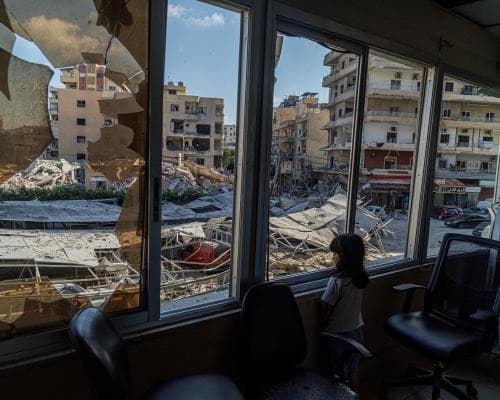
10.58pm BST
A summary of today’s developments Donald Trump on Wednesday signed the memorandum of understanding aimed at ending the war with Iran, a White House official told Reuters. The text of the agreement has been officially signed by the presidents of both sides, Iran state media reported, citing foreign ministry spokesperson Esmaeil Baghaei.
The deal for an immediate and permanent halt to military operations on all fronts, includes Lebanon . The deal commits both sides and their allies to cease hostilities and refrain from the threat or use of force against each other – though Israel retains the right to strike back if Hezbollah attacks.
Israel has not been shown the final text of the MOU, according to its prime minister, Benjamin Netanyahu, though senior US officials said he had been briefed consistently on its substance.
Iran will not receive broad sanctions relief simply by signing. Senior officials were emphatic on a press call that sanctions removal is directly tied to nuclear performance. Iran has committed to destroying its enriched uranium stockpile at minimum through down-blending under IAEA supervision – a concession officials called “a major, major win”.
The strait of Hormuz is set to reopen for toll-free commercial passage within 30 days. Iran had already stopped firing on vessels in the strait the day before the signing call – the first such pause in 100 days of conflict. One immediate upside for Tehran does kick in upon signing: a US treasury waiver on Iranian crude oil exports. Iran said it will charge ships crossing strait of Hormuz after 60 days, AFP reported.
Both sides have 60 days to reach a final deal to be endorsed by a binding UN security council resolution. Senior US officials said the administration would know within “days or weeks, not months” if Iran was stalling – and was prepared to tighten economic pressure significantly if talks broke down.
Updated at 11.11pm BST
10.52pm BST
Donald Trump on Wednesday signed the memorandum of understanding aimed at ending the war with Iran, a White House official told Reuters.
The text of the agreement has been officially signed by the presidents of both sides, Iran state media reported, citing foreign ministry spokesperson Esmaeil Baghaei.
Updated at 11.10pm BST
10.34pm BST
The US and Iran have signed the MOU for ending war electronically on Wednesday and it is now in effect, according to website Axios.
10.25pm BST
Iran said it will charge ships crossing the strait of Hormuz after 60 days, AFP reported.
Mohammad Bagher Ghalibaf, , Iran’s top negotiator, said in an interview aired on state television: “Iran has the right to sovereignty over the Strait of Hormuz and of course we will receive a fee for services.”
Updated at 10.42pm BST
10.14pm BST
The most important issue in imminent nuclear talks between Iran and the United States is how Iran’s nuclear programme will be policed, Saudi Arabia’s foreign minister, Prince Faisal bin Farhan, said.
“The detail will matter,” Prince Faisal said of the talks, speaking at a conference in Vienna hosted by Brussels-based thinktank the European Council on Foreign Relations. He declined to comment on the detail of the MOU because he had not yet seen the final version.
US ally and Iranian rival Saudi Arabia has long kept a close eye on Iran’s nuclear programme, which Tehran says is entirely peaceful.
“It will be most important to see the verification mechanisms that are [put] in place beyond the actual commitments on [uranium] enrichment, the actual commitment on the removal or down-blending of nuclear materials,” Farhan said of the talks.
He added: “How we will have a long-term, sustainable verification regime is what will matter the most, and that is what will give the international community but also the regional countries the most confidence and the ability to look towards a better future.”
Updated at 10.25pm BST
9.55pm BST
Mohammad-Bagher Ghalibaf, Iran’s top negotiator, said the strait of Hormuz will not return to prewar conditions when it reopens but this does not mean acting against international laws or maritime navigation, Iran’s state media reported.
Ghalibaf added that Tehran will charge for services in the strait, adding as per the MOU, $300bn has been allocated to be invested in the country, part of which will be spent on reconstruction.
Updated at 10.13pm BST
9.31pm BST
'Very good deal': G7 leaders back tentative US-Iran deal Leaders at the Group of Seven summit have backed Donald Trump’s tentative agreement with Iran to open the strait of Hormuz and extend a ceasefire.
The French president, Emmanuel Macron, called it a “very good deal”, noting it could stabilise the region and benefit economies.
The deal is set to be signed in Switzerland on Friday and aims to end US and UN sanctions on Tehran if a final agreement addressing Iran’s nuclear program is reached.
Updated at 10.41pm BST
9.15pm BST
Iran and the US will end fighting on all fronts, per MOU details published by Iran’s official IRNA news agency, and both countries will end naval blockades in the region.
Iran’s official news agency released details of the deal planned to be signed on Friday, shortly after a US official released a copy of the text.
Details published by IRNA included US commitments to grant Iran access to its frozen funds and end the blockade on its ships and ports while Tehran commits to facilitate the return of marine traffic in the Gulf and Gulf of Oman to prewar levels and not to produce or acquire nuclear weapons.
Related: US-Iran deal takeaways: reopening the strait of Hormuz, waived oil sanctions and Lebanon
Updated at 9.18pm BST
8.59pm BST
The day so far The US and Iran have come to terms on a preliminary agreement for an immediate and permanent halt to military operations on all fronts, including in Lebanon. The deal commits both sides and their allies to cease hostilities and refrain from the threat or use of force against each other – though Israel retains the right to strike back if Hezbollah attacks.
Israel has not been shown the final text of the MOU , according to its prime minister, Benjamin Netanyahu, though senior US officials said he had been briefed consistently on its substance.
Iran will not receive broad sanctions relief simply by signing. Senior officials were emphatic on a press call that sanctions removal is directly tied to nuclear performance. Iran has committed to destroying its enriched uranium stockpile at minimum through down-blending under IAEA supervision – a concession officials called “a major, major win”.
The strait of Hormuz is set to reopen for toll-free commercial passage within 30 days. Iran had already stopped firing on vessels in the strait the day before the signing call – the first such pause in 100 days of conflict. One immediate upside for Tehran does kick in upon signing: a US treasury waiver on Iranian crude oil exports.
Both sides have 60 days to reach a final deal to be endorsed by a binding UN security council resolution. Senior US officials said the administration would know within “days or weeks, not months” if Iran was stalling – and was prepared to tighten economic pressure significantly if talks broke down.
Trump did negate that characterization later, telling reporters: “I don’t view it as hard … Just as long as they are behaving, I really don’t care that much.”
For a fuller accounting of the MOU, what’s in it, and what’s not, read my piece on key takeaways from the US-Iran deal .
Updated at 9.18pm BST
8.53pm BST
US senator slams Trump’s Iran deal as ‘worst foreign policy blunder in decades’ Veteran US Republican senator Bill Cassidy has slammed the memorandum of understanding the Trump administration has reached with Iran – two days before both parties are set to sign it – as “the worst foreign policy blunder in decades” .
The Louisiana senator, who lost his primary last month to a Trump-backed challenger, wrote on X:
[Former president Ronald] Reagan is rolling over in his grave. Iran’s nuclear ambitions were not curbed, and they have learned that threatening the Strait of Hormuz works and will undoubtedly leverage it in the future. Now, Iran gets to build brand-new infrastructure under this deal.
Before the war, the strait was open, Iran was being crushed by sanctions, and 13 service members were still alive. Now, 13 Americans are dead, families have paid billions at the pump, sanctions will be lifted, and the bombing has stopped. This is the worst foreign policy blunder in decades.
Before the text was released, Cassidy had already been commenting on what was being reported, while cautioning that he hadn’t seen the details.
He told a phone press conference of Louisiana reporters on Tuesday: “This is a bad deal, if the details remain the same. The deal, as I’ve heard it, makes your allies weaker and Iran stronger.”
And this morning, he told a reporter with Nexstar: “The details I’ve seen so far look awful … this will go down as a tremendous foreign policy blunder”.
8.26pm BST
Trump says 60 days isn't a hard deadline Before getting on the plane, Trump told reporters that the 60-day deadline written in the US-Iran MOU “could take longer”
“I don’t view it as hard,” Trump said. “Just as long as they are behaving, I really don’t care that much.”
Updated at 8.32pm BST
7.50pm BST
Tehran floats a presidential signing of MOU in Geneva Iran’s foreign ministry has confirmed it is weighing a proposal for both countries’ presidents to sign the MOU in Geneva, a significant symbolic step up from the arrangement that had previously been on the table.
“Regarding the signing of the memorandum of understanding, one idea is that it be done by the presidents of the two countries, which is currently under review,” ministry spokesperson Esmaeil Baqaei said.
Until now, the plan had been for JD Vance and the Iranian parliament speaker, Mohammad Bagher Ghalibaf, to represent their respective countries at the ceremony.
A head-of-state signing would carry considerably more political weight, and for Tehran, would amount to a public acknowledgment from Washington of Iran’s standing as a negotiating equal.
Updated at 7.56pm BST
7.35pm BST
60 days to negotiate, but deal is fragile Finally, the MOU gives both sides 60 days to negotiate a comprehensive final agreement, extendable by mutual consent. A binding UN security council resolution would be required to endorse any final deal.
“The United States of America and the Islamic Republic of Iran commit to negotiating and achieving the final deal in maximum 60 days extendable with mutual consent.”
But the fragility shouldn’t be understated: one senior US official explained that “either side can walk away at any time”.
The official added that the Trump administration would know within “days or weeks, not months” if Iran was stringing it along.
And if talks collapse, they indicated the US was prepared to tighten the economic pressure significantly.
Updated at 7.38pm BST
7.24pm BST
Iran wanted its frozen assets on signing but didn't get them According to the officials on the call, the text makes clear that access to Iran’s frozen funds is contingent on the regime actually implementing the agreement’s terms.
“Such funds … shall be made fully usable for payment to any ultimate beneficiary designated by the Central Bank of the Islamic Republic of Iran … upon the implementation of the MOU.”
Officials on the call said Iran had pushed hard for the opposite: immediate access to its frozen assets the moment the MOU was signed.
Updated at 7.29pm BST
7.14pm BST
Netanyahu says he hasn’t seen the document, but US says he didn't ask Israeli prime minister Benjamin Netanyahu publicly stated he had not been given a copy of the MOU.
Senior US officials on the call did not dispute that Netanyahu may not have received the final text, but pushed back on the suggestion Israel had been kept in the dark.
“He has not asked us for a copy of it… but we’ve been briefing him and his team very frequently on what’s happening.”
One senior official said Netanyahu had told the US team privately that if Iran delivers on its commitments, “he thinks that it would be a historic deal”, though both the US and Israel remain skeptical.
Updated at 7.38pm BST
7.10pm BST
Iran had stopped firing on vessels in strait of Hormuz Senior officials said for the first time in the hundred days of war, Iran fired on no vessels in the strait of Hormuz the day before the call.
“Yesterday, which I believe for the first time in the 100 days of this conflict, Iran did not fire at any vessels in the Strait of Hormuz.”
Under the MOU, Iran is required to ensure toll-free passage for commercial vessels for at least 60 days, with full restoration of traffic within 30 days. Senior officials said the Gulf states would never agree to any longer-term arrangement that charges for access.
The formal signing ceremony is set for Friday.
7.07pm BST
More commentary on the reasoning from senior officials on the oil relief:
“The President of the United States and the entire team agreed that it’s absurd to sanction Iranian oil in such a way that they are still allowed to sell that oil, we just give China a big fat discount, we stopped that process, and of course it’s part of the broader agreement.”
7.04pm BST
One immediate benefit for Iran: an oil sanctions waiver More on sanctions: the MOU is structured so that Iran receives almost nothing upfront…with one exception. The US Treasury will issue waivers for Iranian crude oil exports, petroleum products, and associated banking services the moment the document is signed.
“Immediately upon the signing of the MOU… US Department of Treasury will issue waivers for the export of Iranian crude oil, petroleum products and derivatives, and all associated services, including banking transactions and services, transportations, etc. ...”
Officials defended the move, arguing that Iranian oil was already flowing to China regardless — and that existing sanctions were simply giving Beijing a steep discount.
Relieving the waiver, they said, removes that subsidy and gives the US better visibility into where Iranian oil is going.
6.53pm BST
Sanctions relief and nuclear action are linked Much of the coverage of the deal has treated sanctions relief and the nuclear question as separate tracks. Officials on the call said the two paragraphs use identical language and are deliberately intertwined.
“The United States of America undertakes to terminate all types of sanctions against the Islamic Republic of Iran… in an agreed upon schedule as part of the final deal.”
“The sanctions relief in seven is tied to the nuclear settlement in eight,” a senior official said, referring to the paragraph numbers in the agreement. “To the extent that you perform on the nuclear questions, you will get the sanctions relief.”
So: Iran will not receive broad sanctions removal simply by signing the MOU.
6.43pm BST
Iran concedes its enriched stockpile must be destroyed The MOU says that at minimum, Iran conceded, its enriched uranium stockpile “will be destroyed” through “down-blending”(or diluting the uranium) on Iranian soil, under IAEA supervision.
“The two parties also agreed to discuss the issue of enrichment and other mutually agreed matters related to the Islamic Republic of Iran’s nuclear needs, based on a satisfactory framework being agreed upon in the final deal.”
Officials were emphatic that down-blending is a starting point, not the endpoint. “That’s the floor,” one said, “and we will push for more than that.”
Updated at 7.14pm BST
6.39pm BST
Donald Trump earlier cast some doubt on whether the signing would happen as planned. Asked how confident he was that the ceremony would take place, Trump remarked on the unpredictability of deals.
“You never know with deals, do you? But you’re going to find out pretty soon,” he said.
6.39pm BST
The deal commits both sides to an immediate, permanent halt to fighting — including in Lebanon To start, both the US and Iran, along with their allies, agree to declare an end to military operations on all fronts the moment the document is signed.
Senior officials on the call read out the line: “The United States of America and the Islamic Republic of Iran and their allies in the current war by signing this MOU declare the immediate and permanent termination of military operations on all fronts, including in Lebanon.”
The inclusion of Lebanon is significant, and it effectively requires Iran to rein in Hezbollah. Israel, officials added, retains the right to strike back if Hezbollah attacks regardless.
Updated at 6.40pm BST
6.39pm BST
The officials spoke on Wednesday on condition of anonymity to read the the draft, which Iran has not released, ahead of formal signing ceremony set for Friday.
6.33pm BST
Senior US officials read out MOU to reporters While Trump was delivering his press conference, senior US officials read the memorandum of understanding on Iran to journalists on a press call. The Guardian was on the line, and will be breaking down some of the key moments and lines from the text.
Updated at 6.33pm BST
6.14pm BST
Trump ends the presser on a slightly random comment saying that if JD Vance goes to sign the deal with Iran, “if it works out, I’m going to take the credit; if it doesn’t work out, I’m blaming JD.”
“You better be careful, JD, he’s going to turn his plane around and get the hell out of here. Yeah, I like that idea. I think it’s a good idea.”
6.13pm BST
Donald Trump said he would take action on Iran sanctions “as soon as they behave”, without giving more details about what that might look like.
Speaking at the G7 press conference, the US president said: “Something will happen as soon as they behave. When they behave, we’re going to let that go. We’re going to have to. I put sanctions on a lot of people, and then I let them go.”
5.55pm BST
The day so far US president Donald Trump said the deal with Iran is “not final” and threatened to “go back to shooting” Tehran if it does not “behave”. Speaking to reporters before meeting with Egyptian president Abdel Fatah el-Sisi at the G7 summit, he said: “It’s not final. It’s a memorandum of understanding, and if I don’t like it, we’ll go back to shooting at them , dropping bombs on their head.”
Trump said that the deal his administration has struck with Iran will act as a “wall” to the Middle Eastern country having a nuclear weapon. Speaking in Évian-les-Bains, France, he told reporters that the memorandum of understanding (MOU) is a “strong one” and that if Iran went back on the deal, “the process will start again”.
US vice-president JD Vance said the text of the US-Iran deal would be released on Friday “at the latest” , as he was quizzed on the contents of the memorandum of understanding that has been widely reported in the media. Vance said Washington has been pushing for it to be released sooner but that Qatari and Pakistani negotiators, who helped mediate the agreement, “asked us not to release the full text for a little while”.
Lebanese president Joseph Aoun said that the Lebanon’s negotiations with Israel in Washington were independent of the US-Iran deal to bring an end to the Middle East conflict. “The assurances we have received, and what we insist on, is that Lebanon’s path in the negotiations is independent, though we are certainly for a ceasefire and for any country that helps us, including Iran ,” Aoun said, according to a statement from his office, after Iran and Pakistan said Lebanon was included in the US-Iran deal.
China’s top diplomat told his Iranian counterpart today that it was “key” for all sides to “genuinely implement” their commitments after Tehran and Washington reached a memorandum of understanding to end their war, Beijing’s foreign ministry said. “The dawn of peace has already emerged, the key part of the next step is for all parties to genuinely implement their commitments and eliminate interference from various sides,” Wang Yi told Abbas Araghchi in a phone call.
Italy’s embassy to Tehran will re-open on Friday after more than three months of closure because of the Middle East war, the foreign ministry said on Wednesday. “Our embassy in Tehran will re-open its doors on Friday,” foreign minister Antonio Tajani told Italy’s parliament.
Israeli operations in the Gaza Strip have killed 1,005 Palestinians in the eight months since a ceasefire was reached between Israel and the militant group Hamas. That’s according to the Gaza health ministry’s latest toll released on Wednesday. Earlier this week, the death toll from the Israel-Hamas war surpassed 73,000 in Gaza, the ministry said.
Nato secretary general Mark Rutte hailed the US-Iran deal to end the Middle East war, saying the planned reopening of the strait of Hormuz would be a “massive step forward”. “I know that many allies, through the initiative led by France and the United Kingdom, are ready to support,” Rutte told a press conference in Brussels.
Iran’s military has threatened to respond to Israel after strikes in southern Lebanon killed four people, despite an agreement being reached between Tehran and Washington to end the Middle East war, including in Lebanon. Lebanon’s National News Agency reported Israeli warplanes targeting the southern town of Nabatieh al-Fawqa and a drone strike in Ansariyeh on the coast this morning. There was no immediate comment from the Israel Defense Forces (IDF) on the reports.
5.47pm BST
Curiously, Trump also thanks Russia’s Vladimir Putin and China’s Xi Jinping for staying neutral on Iran, saying otherwise “they could have made it much more difficult for us.”
Follow the full press conference in our Europe live blog here:
Related: Donald Trump speaks at G7 summit after Macron hails ‘real progress’ on Ukraine – Europe live
5.39pm BST
Hezbollah chief Naim Qassem said that Lebanon’s negotiations with Israel should be limited to “mutual security”, and that the country’s main demand should be restoring its sovereignty after Israeli troops invaded the south.
“The ceiling for the negotiations with the Israeli enemy is mutual security... and any proposal under the banner of disarmament will not pass, as this is an Israeli recipe for taking everything and wrecking the country,” Qassem said in a televised address.
“Everything linked to organising our domestic situation, whether the issue of weapons or the economy, or the national security strategy or defence strategy... it all must be completely outside the negotiations. This we discuss internally. Therefore in any negotiation, the main demand must be Lebanon’s sovereignty,” he added.
5.32pm BST
Trump said he will work with the Gulf nations on “non-nuclear issues” but claims that maritime traffic through the strait of Hormuz “has already incrased very substantially” as a result of his political deal.
He then went back to praising himself.
What I’m doing and what I did should have been done years ago, would have been much easier, much less firepower, but it wasn’t.
5.28pm BST
US president Donald Trump is speaking at the G7 again this evening, saying his Iran deal “achieves everything we set out to accomplish and … much more.”
“If we didn’t do this deal, we could have dropped more bombs for another three weeks, two weeks, four weeks, two years, you years, you would never have the Hormuz strait open, you would never have success,” he said.
He said he “didn’t want to see economic catastrophe. If you kept this going, that could have happened.”
Trump added:
And by the way, if they don’t honor the agreement or some things aren’t even mentioned in the agreement, it’s a memorandum of understanding. But we have an understanding of certain things without writing it.
And, if they don’t honor that, we’ll probably go back to bombing them until they honor it. You know, it’s amazing what bombs can do.
5.19pm BST
Largely similar versions of the Memorandum of Understanding agreed between the US and Iran have been published ahead of formal publication, which is due after a signing ceremony at a Qatari owned luxury hotel in Lucerne, Switzerland, on Friday.
The memorandum has been described as “conceptual” by Donald Trump, and in essence deals with the start of a 60-day ceasefire, the reopening of the strait of Hormuz, the interconnection between talks on Iran’s nuclear program and the sanction relief that Iran will receive.
Tasnim, the news agency closest to the Islamic Revolutionary Guards Corps, has claimed the leaked drafts is deficient with regard to the strait, a possible reference to a passage that Iran insists has been included saying the strait will be administered after 60 days by Iran. There is no reference to such an Iranian role in the leaked draft.
The draft opens by saying: “The Islamic Republic of Iran and the United States, along with their allies in the current war, by signing this memorandum of understanding, declare an immediate and permanent end to the war on all fronts, including Lebanon and pledge from now on not to launch any hostile action against each other and to refrain from threatening or using force against each other.”
The reference to Lebanon’s inclusion in the ceasefire and the binding in of all allies, a reference to Hezbollah and Israel, was crucial to Iran. But the US says the reference to a permanent end of the war does not require a Israeli withdrawal from Lebanese territory.
The next section states: “The Islamic Republic of Iran and the United States also commit to respect each other’s sovereignty and territorial integrity, and to refrain from interfering in each other’s internal affairs.”
Both countries have accused each other of seeking regime change but Trump has now declared he is not a fan of enforced external regime change. The next section says 60 days has been set aside to reach a final agreement but this is extendable by mutual agreement.
5.01pm BST
An explosive Hezbollah drone detonated near Israeli soldiers in southern Lebanon, injuring four of them, the Israeli military said in an X post on Wednesday.
A second drone exploded several minutes later, injuring another soldier, the Israeli military added.
4.45pm BST
China’s top diplomat told his Iranian counterpart today that it was “key” for all sides to “genuinely implement” their commitments after Tehran and Washington reached a memorandum of understanding to end their war, Beijing’s foreign ministry said.
“The dawn of peace has already emerged, the key part of the next step is for all parties to genuinely implement their commitments and eliminate interference from various sides,” Wang Yi told Abbas Araghchi in a phone call.
“China has consistently supported Iran’s reasonable and legitimate claims and Iran’s efforts in safeguarding its own sovereignty and security,” Wang added.
4.12pm BST
Italy’s embassy to Tehran will re-open on Friday after more than three months of closure because of the Middle East war, the foreign ministry said on Wednesday.
“Our embassy in Tehran will re-open its doors on Friday,” foreign minister Antonio Tajani told Italy’s parliament.
After the US and Israel began the war with air strikes on Iran, Italy in early March decided to temporarily close its embassy and move its staff to neighbouring Azerbaijan for security reasons.
“Our ambassador will return to the Iranian capital with all our diplomats and foreign ministry officials,” Tajani said.
3.54pm BST
Israeli operations in the Gaza Strip have killed 1,005 Palestinians in the eight months since a ceasefire was reached between Israel and the militant group Hamas.
That’s according to the Gaza health ministry’s latest toll released on Wednesday. Earlier this week, the death toll from the Israel-Hamas war surpassed 73,000 in Gaza, the ministry said.
It does not differentiate between civilians and combatants. It is staffed by medical professionals and maintains detailed records viewed as generally reliable by the international community.
Updated at 3.58pm BST
3.23pm BST
US president Donald Trump says that the deal his administration has struck with Iran will act as a “wall” to the Middle Eastern country having a nuclear weapon.
Speaking in Évian-les-Bains, France, he told reporters that the memorandum of understanding (MOU) is a “strong one” and that if Iran went back on the deal, “the process will start again”.
Trump added that the MOU is a “very strong one”.
Updated at 4.00pm BST
2.56pm BST
Vance said he expects gas prices to come down “a lot more” over the next few weeks.
“We really do think, as the president said, this was a short-term increase in prices,” he told CBS.
“We understand it caused a lot of disruption, there are a lot of American families who are struggling, but this is not a long-term change.”
2.33pm BST
Vance says text of US-Iran deal will be released on Friday 'at the latest' US vice-president JD Vance said the text of the US-Iran deal would be released on Friday “at the latest” , as he was quizzed on the contents of the memorandum of understanding that has been widely reported in the media.
Vance said Washington has been pushing for it to be released sooner but that Qatari and Pakistani negotiators, who helped mediate the agreement, “asked us not to release the full text for a little while”.
“We’re actually trying to push them to get it out today, because we want to tell the American people what’s in this deal,” Vance told CBS.
He described it as a “good deal for the American people” and said he had seen “misrepresentations” about it, in an apparent reference to reports about leaked versions of the draft.
Vance said the agreement would reopen the strait of Hormuz “immediately” and provide a framework “whereby if the Iranians give us what we need on stopping the funding of terrorism, on no longer pursuing a nuclear weapon, then they can get some benefits, be reinvited into the world economy”.
“When I say benefits, I’m talking about sanctions relief on their economy,” he added.
“We’ve destroyed their nuclear programme, but one of the things the president is trying to do is give them the incentive not to try to rebuild that programme for the long haul.”
Updated at 2.34pm BST
2.08pm BST
Human rights experts have alleged that six multinational construction equipment conglomerates may be aiding and abetting war crimes by supplying excavators and bulldozers to Israel, after photos and videos showed the Israeli military using their equipment to demolish villages in south Lebanon.
The Guardian geolocated and verified images showing the Israeli military using excavators made by six companies – Caterpillar, Volvo, Hyundai, Doosan, Hitachi and Komatsu – to destroy homes, public utilities, shops and other structures across southern Lebanon.
Israel has levelled entire villages inside the “yellow line”, a 608 sq km area occupied by Israel along the Lebanese-Israeli border. At least 46 villages in south Lebanon have suffered heavy damage, most of it caused by demolitions carried out after the 17 April Lebanon-Israel ceasefire, according to a satellite analysis by Bellingcat.
The Israeli military said it was destroying Hezbollah infrastructure, with Israel’s defence minister, Israel Katz, calling for “all homes in Lebanese villages near the border” to be destroyed to “remove threats”.
However, Human Rights Watch has said that Israel’s wide-scale destruction of villages could amount to wanton destruction – a war crime. Displaced residents have watched from afar as videos show craters and vast fields of rubble where their family homes once stood.
Much of that destruction is being carried out by excavators and bulldozers produced and sold to Israel by foreign companies.
Related: Construction equipment multinationals may be aiding Israeli war crimes, experts say
1.51pm BST
Lebanon is following its own path in negotiations independently of US-Iran deal, says Aoun Aoun also said that the Lebanon’s negotiations with Israel in Washington were independent of the US-Iran deal to bring an end to the Middle East conflict.
“The assurances we have received, and what we insist on, is that Lebanon’s path in the negotiations is independent, though we are certainly for a ceasefire and for any country that helps us, including Iran,” Aoun said, according to a statement from his office, after Iran and Pakistan said Lebanon was included in the US-Iran deal.
“The Lebanese state is sovereign in its decision-making, and for the first time, it is the one conducting the negotiations, and nobody is negotiating for us,” Aoun said ahead of a fifth round of Israeli-Lebanese talks next week.
Updated at 2.17pm BST
1.35pm BST
Lebanese president Joseph Aoun said on Wednesday that Lebanon welcomed support from any country, including Iran, to help secure a ceasefire, marking a softer public tone towards Tehran after weeks of sharp criticism.
Earlier this month, Aoun accused Iran of using Lebanon as a bargaining chip in its negotiations with the United States and said Lebanese people were being killed to serve Iran’s interests.
1.16pm BST
The International Energy Agency said that opening the strait of Hormuz was essential to ending the shock from soaring oil and gas prices.
“The single most important solution to this problem is fully and unconditionally opening up the strait of Hormuz to shipping,” said IEA chief Fatih Birol.
Updated at 2.36pm BST
12.46pm BST
Since the US-Iran deal was announced, families displaced by war in southern Lebanon have begun to return to their homes. Many of them have found their villages and towns almost completely destroyed by Israeli bombing, which has killed nearly 4,000 people and displaced more than one million since renewed fighting with Hezbollah began on 2 March.
Lebanon’s official National News Agency has reported continued Israeli strikes in the south of the country this morning, even as leaders of the G7 called for an immediate ceasefire.
12.17pm BST
Trump also addressed media reports of a leaked US-Iran deal (see post at 11:57 ), denying claims it includes a $300bn reconstruction fund for Tehran.
“We’re not putting up 10 cents,” he said. “We are not investing and we do not have a fund.”
When pressed on whether he would ask Gulf countries to invest in the fund, Trump said: “No, I’m not, I’m not. If they do it, fine. But I would say they won’t be doing it for a while until they find out the behaviour. It’s a behaviour thing, but we are not investing.”
Updated at 12.27pm BST
12.05pm BST
'If they don't behave, we will go right back to dropping bombs right smack in middle of their heads,' Trump says on Iran US president Donald Trump said the deal with Iran is “not final” and threatened to “go back to shooting” Tehran if it does not “behave”.
Speaking to reporters before meeting with Egyptian president Abdel Fatah el-Sisi at the G7 summit, he said:
It’s not final. It’s a memorandum of understanding, and if I don’t like it, we’ll go back to shooting at them , dropping bombs on their head.
If I don’t like it, if they don’t behave, we’ll go right back to dropping bombs right smack in the middle of their head, okay, because they’ve misbehaved for 47 years.”
Updated at 12.09pm BST
11.57am BST
Several US media outlets have reported details of leaked copies of the interim agreement between the US and Iran. Many details of the terms have already been reported by Iranian media, but neither Washington nor Tehran have officially confirmed the contents of the memorandum of understanding that is due to be formally signed on Friday.
Under the agreement, Iran will immediately take steps to reopen the strait of Hormuz once the tentative deal is signed, and it will be allowed to sell its oil without restrictions, AP reported.
The news agency stated that, according to the leaked text, Washington would secure at least $300bn for the reconstruction and economic development of Iran and work to end all US and UN sanctions imposed on Tehran if a final agreement addressing its nuclear programme is reached.
The deal calls for an immediate end to all fighting between Israel and Hezbollah in Lebanon, but it makes no mention of a withdrawal of Israeli troops, a key demand of Iran, AP reported.
Updated at 11.59am BST
11.36am BST
An Israeli real estate event in north London appears to have advertised the sale of land in Israeli settlements in East Jerusalem and the occupied West Bank, despite previous denials that illegal settlement properties would be marketed at the event.
Pamphlets shared with the Guardian from the event on Sunday showed real estate projects in Ma’ale Adumim, Givat Ze’ev, Kfar Eldad and Teneh Omarim in the occupied West Bank , as well as Ramat Eshkol and Givat Hamatos in East Jerusalem.
The event was held after more than 100 UK lawmakers as well as civil society organisations had called for its cancellation, saying it was inconsistent with the government’s obligations under international law as well as guidance on settlement-related economic activity.
“There is a prima facie case at the very least that people were advertising land in illegal settlements and that is contrary to law, and the government needs to act,” said Andy McDonald MP, co-chair of the British-Palestine all-party parliamentary group.
Read more:
Related: Real estate event in London ‘advertised sale of land in illegal Israeli settlements’
11.16am BST
In their joint statement, the leaders of the G7 also (very briefly) pledged to “accelerate humanitarian and reconstruction efforts” and implement “relevant political and security measures” in Gaza.
“We call for ending violence in the West Bank,” the G7 leaders said.
Attacks by Israeli settlers and the military on Palestinians in the occupied West Bank have become commonplace, amid what human rights groups say is a campaign of abuse and harassment to push Palestinians off their land and expand Jewish settlements.
In the most recent attack, Israeli settlers vandalised a mosque and set it ablaze in the Palestinian village of Jaljilya, according to local reports. Pictures show the damage inside the building with Hebrew graffiti daubed on the walls.
Updated at 12.11pm BST
10.49am BST
Meanwhile, Nato secretary general Mark Rutte hailed the US-Iran deal to end the Middle East war, saying the planned reopening of the strait of Hormuz would be a “massive step forward”.
“I know that many allies, through the initiative led by France and the United Kingdom, are ready to support,” Rutte told a press conference in Brussels.
You can follow our Europe live blog for more of Rutte’s remarks and other related news here:
Related: Mark Rutte says Nato needs ‘more forces, more resources’ ahead of defence ministers meeting– Europe live
10.22am BST
The G7 leaders’ statement described the announcement of a US-Iran deal to end the Middle East war as a “historic opportunity” and a “breakthrough”.
The statement signed by the leaders of the UK, US, France, Germany, Italy, Japan and Canada said:
We welcome the announcement of a deal between the United States and Iran, secured under the strong leadership of President Trump, with the support of mediating countries, which provides an historic opportunity to prevent Iran from acquiring any nuclear weapon and tackling the threats related to its regional and ballistic activities. We support and are ready to contribute to its implementation.”
It also added that an initiative led by the UK and France can help to reopen the strait of Hormuz to maritime traffic, but it cautioned that further negotiations were needed “ to address the threats posed by Iran in the region and beyond”.
Updated at 10.23am BST
10.12am BST
G7 leaders issue joint statement calling for 'immediate ceasefire' in Lebanon A meeting was held this morning between world leaders on the final day of the G7 summit in France.
In a joint statement issued earlier, G7 leaders called for “an immediate ceasefire” in Lebanon.
“In Lebanon, we support, through an immediate robust ceasefire, the Lebanese leadership’s efforts to achieve the disarmament of Hezbollah and the monopoly of arms, and to protect Lebanon’s territorial integrity and sovereignty with the appropriate international security guarantees,” the statement said.
Updated at 11.47am BST
9.24am BST
The Canadian prime minister, Mark Carney, has described the US-Iran memorandum of understanding to end hostilities in the Middle East as a “gamechanger”.
“Not just for this situation … it allows us – and this is what’s happened in the meeting – to step back and look anew at Ukraine,” he told CNN on the final day of the G7 summit in France.
Carney said he has seen a copy of the tentative deal struck between Washington and Tehran, which reportedly calls for the immediate lifting of the US naval blockade on Iranian ports and the reopening of the strait of Hormuz.
“I have to say, it’s exceeded my expectations,” he said.
The terms of the deal have not been made public and Carney did not disclose how he was able to see a copy other than saying “we have our sources”.
He said the deal “sets the groundwork to ensure Iran doesn’t have a nuclear weapon,” adding: “The Rubicon, if I can use that metaphor, has been crossed.”
8.41am BST
Opening summary Hello and welcome to the Guardian’s live coverage of the crisis in the Middle East.
Iran’s military has threatened to respond to Israel after strikes in southern Lebanon killed four people, despite an agreement being reached between Tehran and Washington to end the Middle East war, including in Lebanon.
Lebanon’s National News Agency reported Israeli warplanes targeting the southern town of Nabatieh al-Fawqa and a drone strike in Ansariyeh on the coast this morning. There was no immediate comment from the Israel Defense Forces (IDF) on the reports.
In an update yesterday, the IDF said it intercepted “several rockets” launched by Hezbollah towards its troops operating in southern Lebanon, and that it struck and destroyed the launcher.
Hezbollah has not issued any recent statements claiming attacks on Israeli targets in southern Lebanon. The group’s leader, Naim Qassem, is due to make a televised address today, according to Hezbollah’s Al-Manar TV.
The Iranian military’s central command Khatam al-Anbiya said Israel must halt its acts of aggression in the south or face “a harsh response” from its forces. It accused Israel of violating the ceasefire in Lebanon “84 times” since the deal was announced.
Iran’s top diplomat and foreign minister, Abbas Araghchi, said a peace deal with the US would require Israel to withdraw from Lebanon . “Without the withdrawal of Israeli forces from the territories they occupied during this war, the war has not fully come to an end,” he said.
Concerns have been growing that Israel could undermine diplomatic efforts to finally end the Middle East war, with Donald Trump criticising his ally and war partner as irresponsible.
“Israel has been fighting Hezbollah for too long and too many people are being killed,” Trump said. “You don’t need to knock down an apartment house when you are looking for somebody because there are a lot of people in those apartment houses, and they are not all Hezbollah, that I can tell you.”
A US-Iran deal aimed at ending the Middle East war will be signed at Switzerland’s mountainside Burgenstock resort on Friday, the Swiss foreign ministry confirmed to AFP. The site, located near Lucerne in central Switzerland, is difficult to access and therefore easily secured. It “was proposed by the Pakistani and Qatari mediators, as well as by the US and Iran”, Switzerland’s foreign ministry said.
Two months of final negotiations will begin immediately after the initial deal between the US and Iran is signed . Negotiations will continue for a 60-day window after the ceremony, officials told AFP, leading to a plan for the lifting of economic sanctions and decisions on the fate of Iran’s nuclear programme.
Trump said that he would send the deal with Iran to the US Congress for a review. “I like the idea, send it to Congress please,” he said at the start of a meeting with the UAE president Sheikh Mohammed bin Zayed Al Nahyan on the sidelines of the G7 summit. “I mean who wouldn’t approve it.”
Speaking at the G7, Trump has said the strait of Hormuz will be open by Friday and that the full text of the peace deal will be released in a “formal setting”. Trump also said he expects the “second stage” of the deal “to go quickly”.
The US will allow Iran to immediately start selling oil and fuel again as part of the deal to end the war, the Wall Street Journal reported, citing sources familiar with the matter. Iran can only sell oil if they keep to the terms of the deal, as US official told Reuters. It includes the free flow of navigation in the strait of Hormuz and not obtaining an nuclear weapon.
An Iranian deputy foreign minister said the two-month US naval blockade on Iranian ports had been lifted ahead of the planned formal signing of a deal ending the war. “The lifting of the blockade was something we had emphasised from the outset. It has now begun, and the blockade has been lifted prior to the formal signing” scheduled for Friday, said Iranian deputy foreign minister Majid Takht-Ravanchi, according to the government’s website.
Qatar, a key mediator between the US and Iran, said it believed the framework peace agreement could deliver security to the Middle East. “We are cautiously optimistic that the signing of the memorandum of understanding will lead to the next phase of regional security through the talks that will take place on the nuclear programme and on other issues,” foreign ministry spokesperson Majed Al Ansari told reporters in Doha, as he praised Pakistan’s mediation efforts.