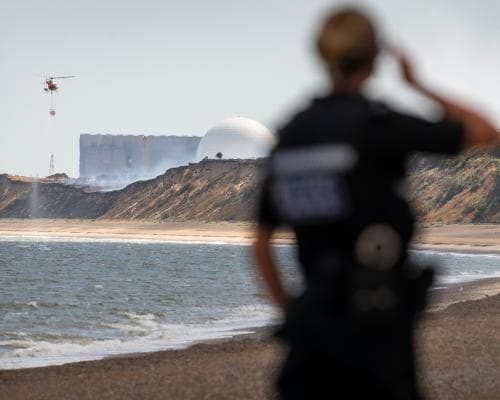
Evacuations and Wildfire Threat Near Suffolk Nuclear Power Station
In a startling turn of events, hundreds of residents were evacuated from their homes near the Sizewell B nuclear power station in Suffolk due to a rapidly spreading wildfire. This incident, described by witnesses as “apocalyptic,” raises significant concerns about nuclear safety in the face of escalating climate-related disasters. As investigators delve into the implications of this wildfire, the intersection of environmental crises and nuclear safety becomes increasingly relevant.
The Wildfire Incident
The wildfire, which has consumed over 80 hectares (approximately 200 acres) of land, prompted Suffolk Fire and Rescue Service to declare a major incident. As of Thursday night, the situation appeared to be stabilizing, aided by a change in wind direction and aerial firefighting efforts. Jon Lacey, the chief fire officer, noted that the unexpected wind shift had provided some relief, allowing crews to focus on containment.
Residents were first alerted to the danger on Wednesday evening, with evacuations occurring shortly after 10 PM. Rob Tucker, a local resident, recounted the chaos of leaving behind personal belongings in the face of the advancing flames. The community rallied together, with local leaders like Andrew Turner opening their homes to those displaced by the fire.
The Broader Context of Climate Change
This wildfire is not an isolated incident but part of a troubling trend. July has seen a record number of wildfires across England and Wales, with 393 incidents reported, highlighting the increasing frequency of such events. The UK is grappling with severe drought conditions, officially declared across half of England, including East Anglia. These conditions create a perfect storm for wildfires, as dry vegetation becomes highly flammable.
Phil Garrigan, chair of the National Fire Chiefs Council, emphasized that wildfires are becoming a persistent threat, no longer confined to seasonal occurrences. The climate crisis, characterized by extreme weather patterns, is exacerbating these risks, making it imperative for emergency services to adapt.
Nuclear Safety Concerns
While officials have stated that there is currently no threat to Sizewell B, the proximity of the wildfire to the nuclear facility raises alarms among safety advocates. The site is equipped with emergency protocols for various scenarios, including fires, but the potential for catastrophic consequences cannot be overlooked. As climate change intensifies, the risks associated with nuclear facilities in fire-prone areas warrant closer scrutiny.

Lead image — via The Guardian
Freddie Gulliver from the Suffolk Joint Emergency Planning Unit reassured the public that there is no immediate concern regarding the fire's impact on Sizewell B. However, the situation remains fluid, and the community's safety is paramount. The juxtaposition of a nuclear power station and a raging wildfire presents a scenario that could have dire implications if not managed properly.
Community Response and Resilience
In the face of adversity, the local community has demonstrated remarkable resilience. Residents have opened their homes to evacuees, showcasing the strength of community bonds during crises. This spirit of cooperation is vital as the region navigates the aftermath of the wildfire and prepares for potential future incidents.
The RSPB’s Minsmere nature reserve, located near the fire's epicenter, has suffered significant damage, threatening local wildlife and habitats. The loss of rare species, such as nightjars and Dartford warblers, underscores the ecological impact of these wildfires, which are becoming more frequent due to climate change.
The Future of Fire Management
Experts like Dr. Zakary Campbell-Lochrie from the University of Edinburgh highlight the urgent need for improved fire management strategies in light of changing climate conditions. The recent decision by Suffolk county council to rescind its climate emergency declaration raises questions about the commitment to addressing these pressing environmental issues.
As the UK faces its hottest summer on record, with rising heat-related deaths, the intersection of climate change, wildfires, and nuclear safety cannot be ignored. The events in Suffolk serve as a stark reminder of the challenges ahead.
Open Questions for Investigators
- How can emergency services better prepare for the increasing frequency of wildfires in proximity to nuclear facilities?
- What steps can local governments take to address climate change while ensuring community safety?
For more details, visit The Guardian.