Summary
UK Prime Minister Andy Burnham has stated that Iran's Islamic Revolutionary Guard Corps (IRGC) are "almost certainly" responsible for threats made against RAF Fairford, a military base in Gloucestershire. This assertion marks a significant escalation in the UK's response to the incident, which occurred on September 27, 2026, when five men were arrested after driving suspiciously near the base. Following the incident, the UK government announced further sanctions against Iran and the IRGC, reflecting heightened security concerns.
What Happened
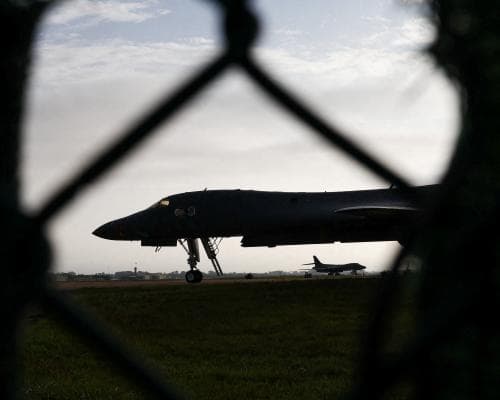
On September 27, 2026, five men from London were detained after driving three white vans to Whelford, a village adjacent to RAF Fairford, shortly after midnight. They were released on police bail the following day when no explosives were found. Despite the lack of charges, the incident raised alarms, particularly in the US, leading to the withdrawal of 12 B-1 bombers from the base due to fears of a potential drone attack.
In a statement to the House of Commons on October 12, 2026, Prime Minister Burnham confirmed the UK's assessment that the threats were likely coordinated by the IRGC, stating, "I can confirm our assessment that it is highly likely to have been coordinated in Iran, almost certainly directed by Iran’s Islamic Revolutionary Guards." Home Secretary Shabana Mahmood added that Foreign Secretary Ed Miliband had summoned the Iranian ambassador and announced sanctions against two individuals accused of espionage linked to Iran.
The UK, US, and European allies issued a joint statement indicating that the incident reflects the IRGC's willingness to engage in hostile activities beyond its borders.
Why It Matters
The attribution of responsibility to the IRGC signifies a serious escalation in tensions between the UK and Iran, particularly regarding security in Europe. The incident at RAF Fairford is part of a broader pattern of alleged Iranian activities targeting Jewish communities and US interests across Europe, which have raised concerns about Iran's operational capabilities and intentions.
The UK government’s decision to impose sanctions underscores its commitment to countering perceived threats from Iran, particularly in light of recent attacks claimed by the Iranian-linked group Harakat Ashab al-Yamin al-Islamiya (HAYI). The ongoing investigations and subsequent legal actions against individuals linked to these threats highlight the urgency of addressing Iran's influence and activities in Europe.
What Remains Uncertain
Despite the firm attribution of responsibility to the IRGC, the specifics of what occurred at RAF Fairford remain unclear. Some experts suggest that the incident may have been a demonstration of Iran's capability to threaten open sites, while British sources maintain that Iran lacks the sophisticated means to execute such an attack. Additionally, the broader implications of the incident for UK-Iran relations and regional security continue to be a matter of speculation.
The ongoing investigations into related incidents, including the recent charges against two Iranian nationals in the UK, further complicate the situation, leaving questions about the extent of Iran's operational reach and the effectiveness of international responses to its activities.
For more details, see the original report from The Guardian.