Drone Incident at Leipzig Airport: A New Level of Danger for Germany
The recent discovery of a drone carrying explosives at Leipzig Airport has sent shockwaves through Germany, prompting serious concerns about national security and potential foreign threats. Interior Minister Alexander Dobrindt described the incident as marking a “new level of danger,” indicating that this could be part of a broader trend of escalating drone-related threats. Investigators are now examining whether this incident is linked to foreign powers, particularly in light of Germany's role in supporting Ukraine amid ongoing geopolitical tensions.
The Incident: What Happened at Leipzig Airport?
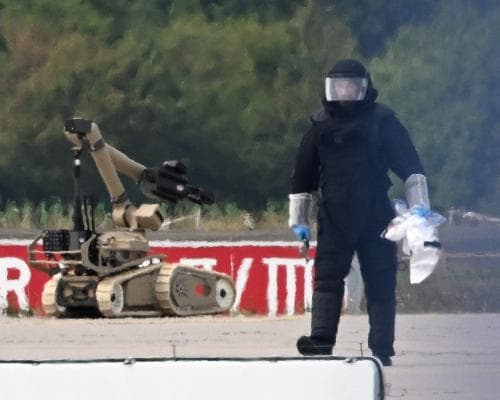
On Wednesday morning, a small drone equipped with explosives was found in the security area of Leipzig Airport, a critical logistics hub for both military and civilian operations. The drone was located near a Ukrainian Antonov cargo plane, which has become a symbol of the ongoing conflict between Ukraine and Russia. Authorities quickly deployed a bomb disposal robot to neutralize the threat, while a DHL cargo plane had to abort its landing due to the incident, later colliding with an unidentified object in mid-air.
Dobrindt emphasized that the operation appeared to be orchestrated by professionals rather than amateurs, suggesting a calculated effort to instill fear and uncertainty in Germany. This incident raises questions about the potential for state-sponsored terrorism, particularly given the geopolitical context surrounding the Ukraine conflict.
Foreign Involvement: Speculations and Accusations
While German officials have not explicitly named Russia as a suspect, the airport's strategic importance as a NATO logistics hub has led to widespread speculation about possible foreign involvement. Dobrindt hinted at a “professional hybrid threat scenario,” indicating that investigators are considering the possibility of state actors being behind the drone attack.

Lead image — via The Guardian
Ukraine's ambassador to Germany, Oleksii Makeiev, did not mince words, stating, “Who else could it be but Russia?” This sentiment echoes the growing concerns among security experts that if Russia is indeed involved, it could represent a significant escalation in the ongoing conflict. The drone's explosive device, reportedly made from pentaerythritol tetranitrate (PETN), further underscores the seriousness of the threat.
Key Points of Concern:
- The drone was found near a Ukrainian cargo plane, raising suspicions of targeted attacks.
- Dobrindt's remarks suggest a professional operation rather than amateur sabotage.
- Investigators are exploring the possibility of state-sponsored terrorism.
Broader Implications: A Pattern of Drone Threats
This incident is not isolated; Germany and other European nations have reported a series of unauthorized drone overflights at critical infrastructure sites, including military facilities and ports. Many of these incidents have been attributed to Russian agents, although Moscow has consistently denied any involvement. The pattern of drone activity raises alarms about the potential for increased surveillance and espionage, as well as the possibility of future attacks.
In a related context, a Chinese national was recently convicted for espionage related to Leipzig/Halle Airport, highlighting the vulnerabilities of critical infrastructure to foreign interference. Moreover, reports have surfaced about Russian plots targeting key figures in Germany's defense industry, indicating a broader strategy of intimidation and sabotage.
The Future of Drone Security in Germany
As the investigation into the Leipzig Airport incident unfolds, the implications for Germany's national security are profound. The potential for state-sponsored drone attacks raises critical questions about the adequacy of current security measures at airports and other vital infrastructure. With rising tensions in Europe, the need for robust countermeasures against drone threats has never been more urgent.
The German government must now grapple with the reality that the threat landscape is evolving, and the use of drones for malicious purposes could become more commonplace. As authorities work to uncover the truth behind this incident, the question remains: how prepared is Germany to face this new era of aerial threats?
As we reflect on the implications of this incident, we invite readers to consider: What measures should be taken to enhance drone security in critical infrastructure? Could this incident signal a shift in how governments approach surveillance and counter-terrorism efforts?